
Crenshaw Dairy Mart, Free the Land! Free the People! a study of the abolitionist pod (September 21, 2024 - February 15, 2025), Installation view at Crenshaw Dairy Mart, Inglewood, CA. Courtesy of Crenshaw Dairy Mart. Photographed by Elon Schoenholz and Angel Xotlanihua.
Free the Land! Free the People!
a study of the abolitionist pod
Presented by the Crenshaw Dairy Mart as part of PST ART: Art & Science Collide by Getty
On view from September 21, 2024 through February 15, 2025
In 2021, CDM began prototyping and building abolitionist pods - autonomously irrigated, solar-powered gardens within modular geodesic domes - with communities impacted by food insecurity, housing insecurity, and the prison industrial complex. Offered alongside workshops on food justice, art, and healing justice, CDM's abolitionist pod project reimagines community care and models how art, architecture, and science can collectively address systemic issues. Free the Land! Free the People! a study of the abolitionist pod is organized as a survey and studio of the Crenshaw Dairy Mart artist collective’s ongoing research for the abolitionist pod, with illustrations, archival documentation, architectural renderings, sketches, and drawings of the collective’s many configurations of the geodesic structure during its prototype phases as they engage with a history of collectives and cooperatives at the interstices of food justice, land sovereignty, and the Black Liberation Movement.
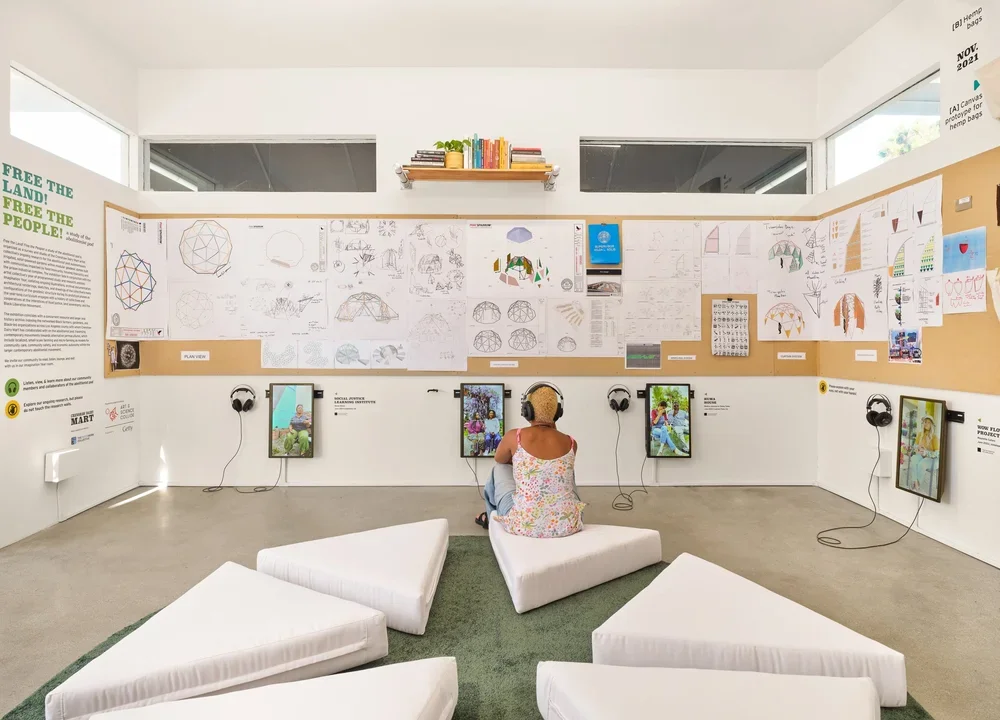
Crenshaw Dairy Mart, Free the Land! Free the People! a study of the abolitionist pod (September 21, 2024 - February 15, 2025), Installation view at Crenshaw Dairy Mart, Inglewood, CA. Courtesy of Crenshaw Dairy Mart. Photographed by Elon Schoenholz and Angel Xotlanihua.
The exhibition falls in conjunction with the artist collective’s year of programmed study and research for the abolitionist pod, entitled Imagination Year, following suit their collective practice of prototyping an abolitionist imagination through group improvisation and experimentation, collating the spiritual-historical-political discourse of the abolitionist pod program, through prayer and somatic-embodiment practices, as it ties to contemporary imaginings of economic autonomy, community resilience, and collective agency for oppressed communities bound to land usage and its reparations. These ruminations and points of departure for the Crenshaw Dairy Mart collective each intersect with the convening of over 500 Black nationalists who sought the creation of a sovereign nation-state, the Republic of New Afrika (RNA). The RNA’s demand for financial restitution and reparations of land, is most notably recognized under the moniker “Free the Land! Free the People!” The exhibition coincides with a concurrent resource and larger archive in indexing the networked Black farmers across Los Angeles county with whom CDM has collaborated with on the abolitionist pod, traversing contemporary movements towards alternative permacultures, which include localized, small-scale farming and micro-farming as models for community care, community safety, and economic autonomy within the larger contemporary abolitionist movement.
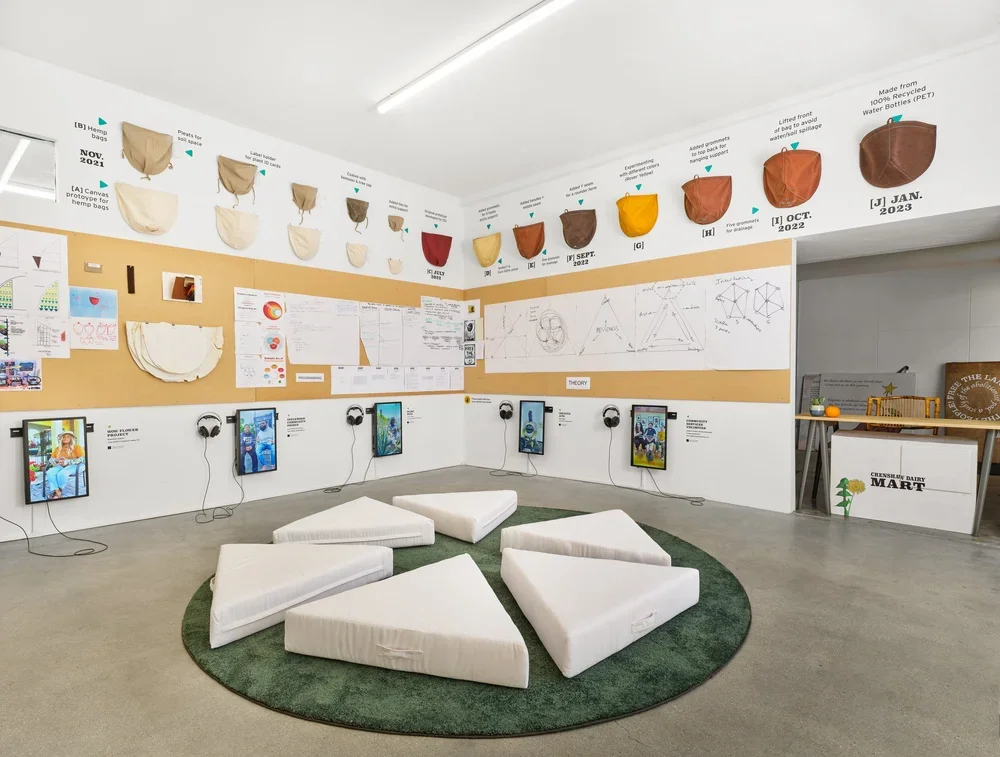
Crenshaw Dairy Mart, Free the Land! Free the People! a study of the abolitionist pod (September 21, 2024 - February 15, 2025), Installation view at Crenshaw Dairy Mart, Inglewood, CA. Courtesy of Crenshaw Dairy Mart. Photographed by Elon Schoenholz and Angel Xotlanihua.
The oral history archive interviews organized as part of Free the Land! Free the People! a study of the abolitionist pod are accessible below:
Social Justice Learning Institute, Interview with Nicole Steele
Inglewood Community Fridge, Interview with juice wood and Vern Yancy
Prosperity Market, Interview with Kara Still and Carmen Dianne
Huma House, Interview with Tobias Tubbs and Meetra Johansen
WOW Flower Project, Interview with Waunette Cullors
Plant Plug, Interview with Taylor Lindsey
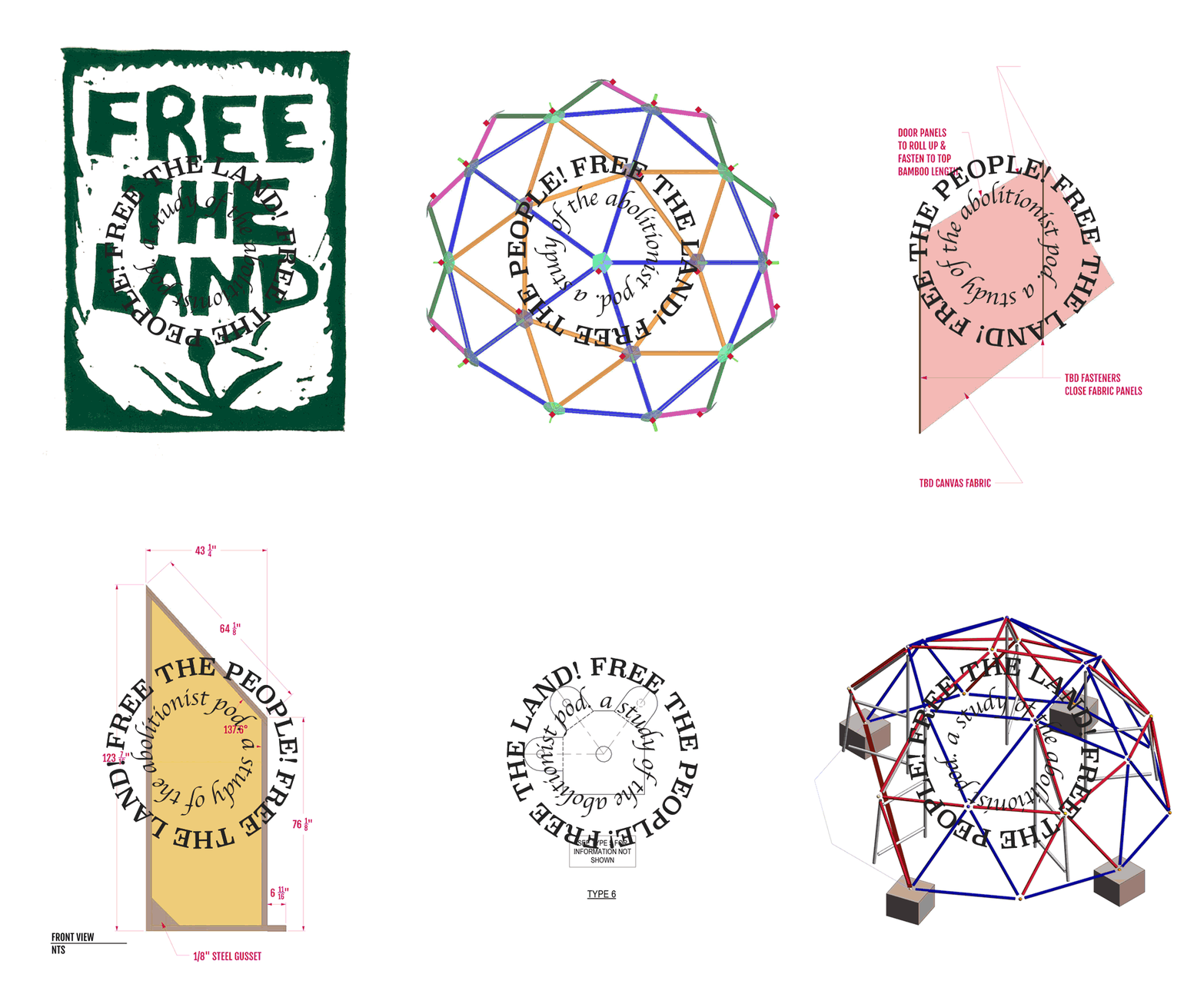
Free the Land! Free the People! a study of the abolitionist pod is among more than 60 exhibitions and programs presented as part of PST ART. Returning in September 2024 with its latest edition, PST ART: Art & Science Collide, this landmark regional event explores the intersections of art and science, both past and present. PST ART is presented by Getty. For more information about PST ART: Art & Science Collide, please visit pst.art
View exhibition website here.
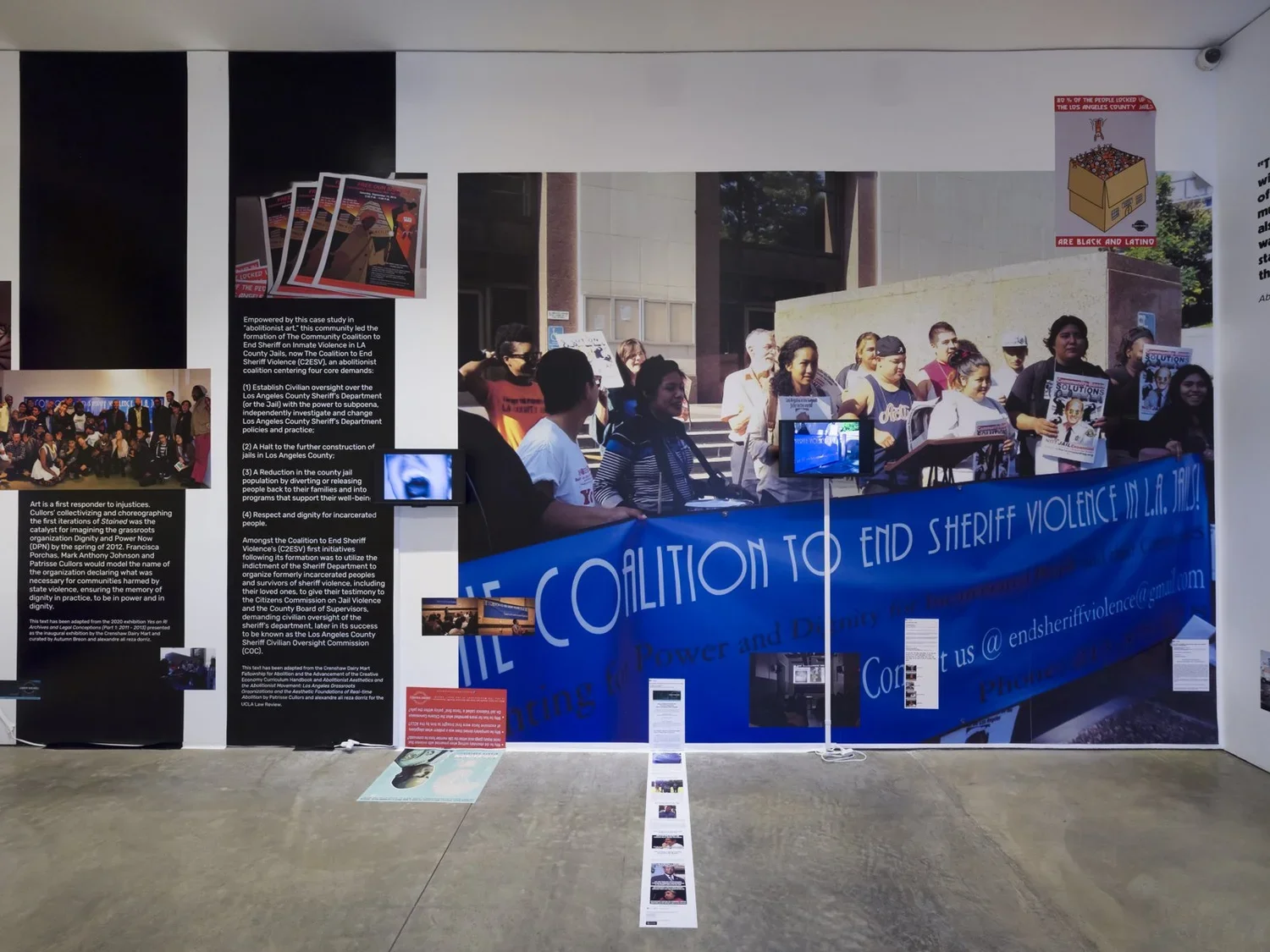
Image Courtesy of Long Beach Museum of Art and Crenshaw Dairy Mart. Photo by Jeff Mclane.
YES ON R! YES ON J! SHUT DOWN MCJ! A Decade in abolitionist aesthetics
Presented by the Crenshaw Dairy Mart as part of Ordinary People, on view at the Long Beach Museum of Art
On view from October 6, 2023 through January 14, 2024
Yes on R! Yes on J! Shut Down MCJ! A Decade in abolitionist aesthetics is a survey exhibition presented by the Crenshaw Dairy Mart. The exhibition expands on the artist collective and arts organization Crenshaw Dairy Mart’s 2020 inaugural exhibition, Yes on R! Archives and Legal Conceptions (Part 1: 2011 - 2013), which examined the early organizing work between several local grassroots abolitionist organizations over the span of nine years. The culmination of these many organizations and coalitions, which include Dignity and Power Now, Reform LA Jails, and Justice LA, together mobilized to implement Measure R on the 2020 Los Angeles, California primary elections ballot, which subsequently passed by a landslide in the same year. This former exhibition and latter, Yes on R! Yes on J! Shut Down MCJ! A Decade in abolitionist aesthetics, together explore the historic movement to end jail expansion in Los Angeles for over a decade. These exhibitions also trace how the arts - as either performance, public interventions, collectives, and happenings - have historically been the first response to injustices within the ecosystem of grassroots abolitionist organizing and have respectively culminated towards legislative feats in the directions of decarceration and justice reinvestment, vis-a-vis structural abolition.
This exhibition has been curated by Autumn Breon and alexandre ali reza dorriz

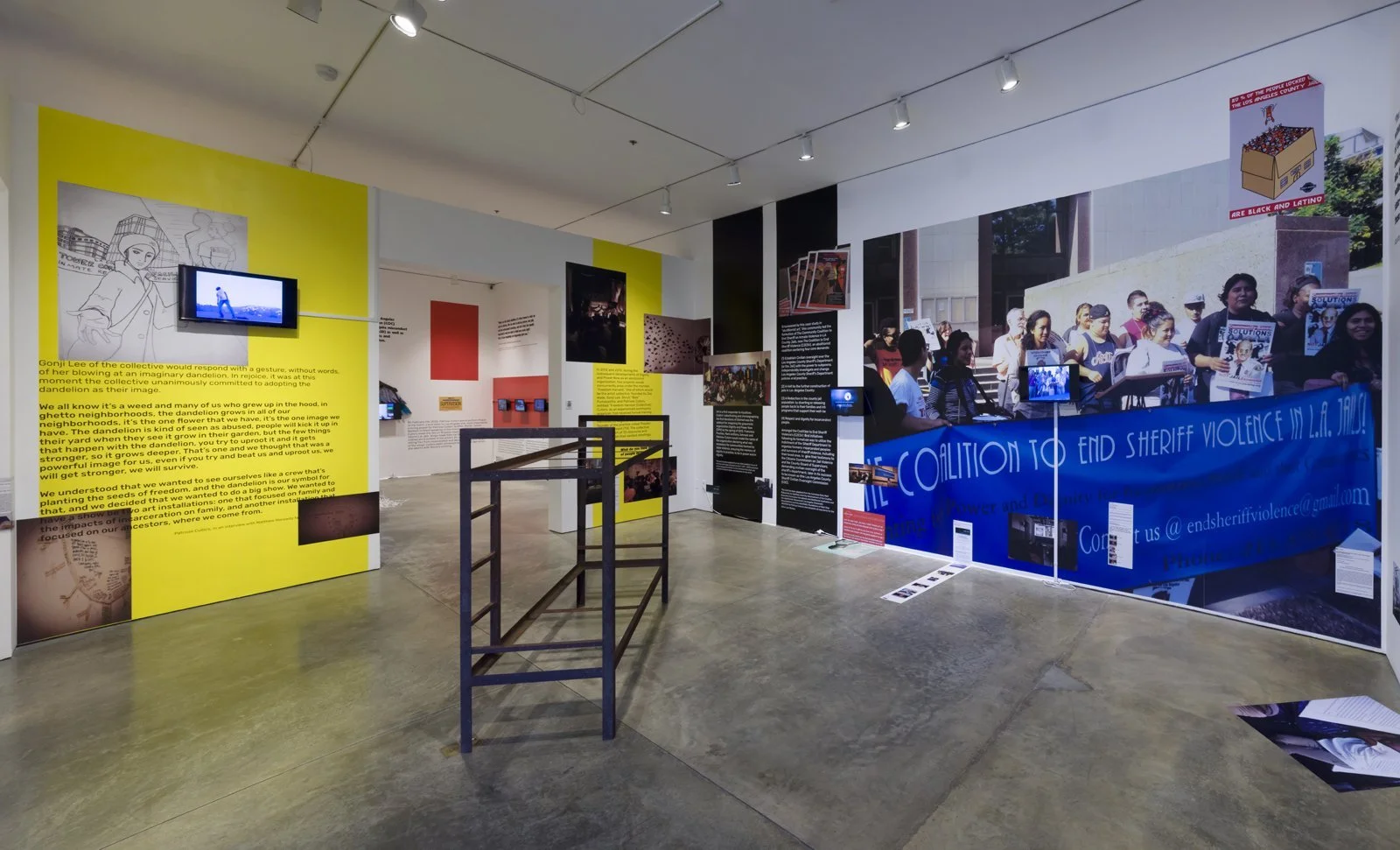
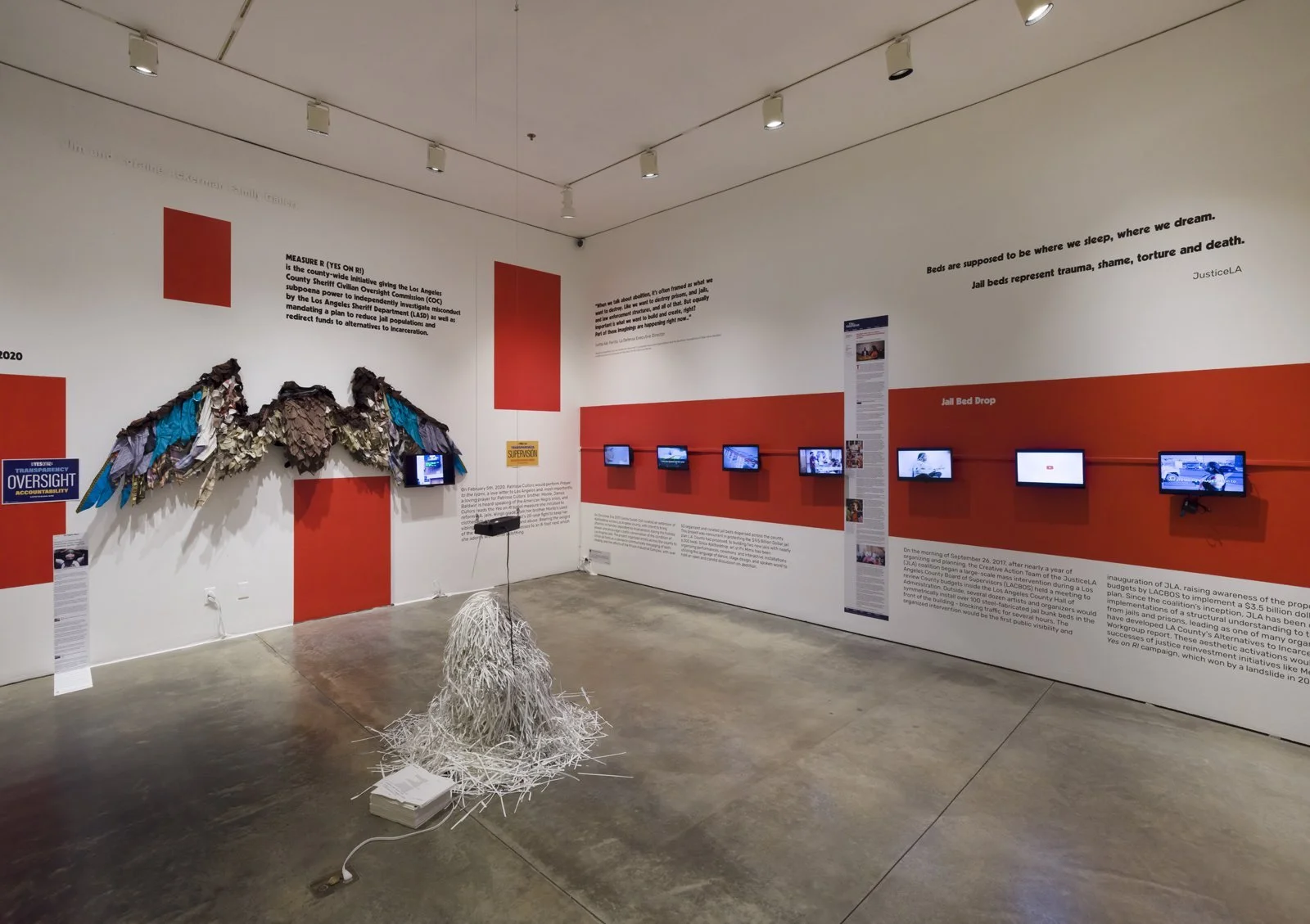
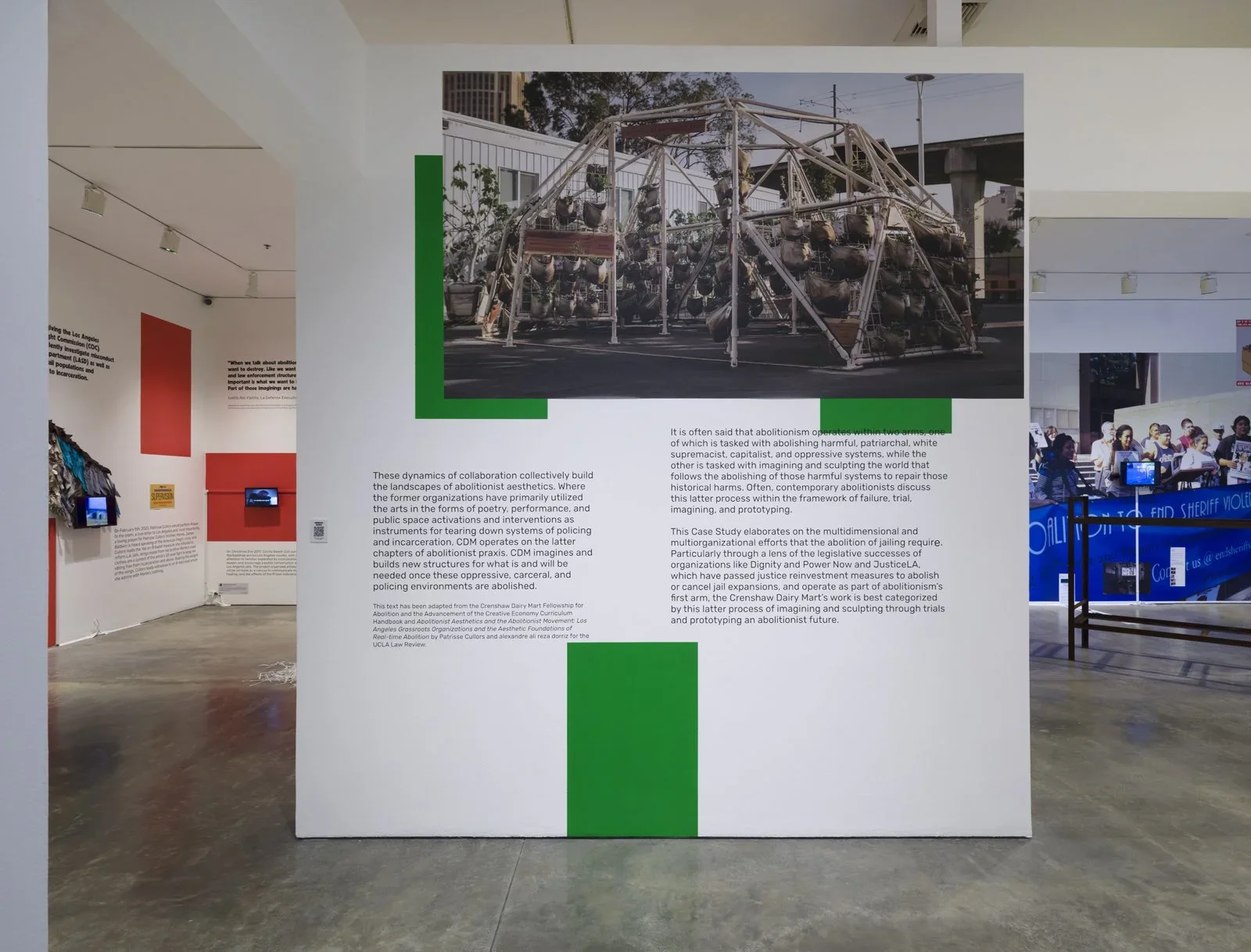
The title of this exhibition adapts a call-and-response for the respective ballot measures and calls to structural abolition through legislation:
Measure R (Yes on R!), the county-wide initiative giving the Los Angeles County Sheriff Civilian Oversight Commission (COC) subpoena power to independently investigate misconduct by the Los Angeles Sheriff Department (LASD) as well as mandating a plan to reduce jail populations and redirect funds to alternatives to incarceration;
Measure J (Yes on J!), passed in 2020, introducing an amendment to the county’s charter to require a minimum of 10% of the county's general fund be allocated to address the disproportionate impacts of systemic racism through an implementation of community investments such as youth development, job training, small business development, supportive housing services and alternatives to incarceration, structurally reducing the funding available for the LASD;
MCJ (Shut Down MCJ!), or Men’s Central Jail, being one of the largest jail facilities in the United States, operated by the LASD, and subject of decades of scrutiny and controversy, most notably the ACLU of Southern California’s 2011 report, Cruel And Usual Punishment: How A Savage Gang Of Deputies Controls LA County Jails, and in more recent years has been subject of contestation between organizers and the Los Angeles County Board of Supervisors (LACBOS) in their inconsistency of the formerly stated commitment to the closure, depopulating, decarceration, and demolition of the jail.
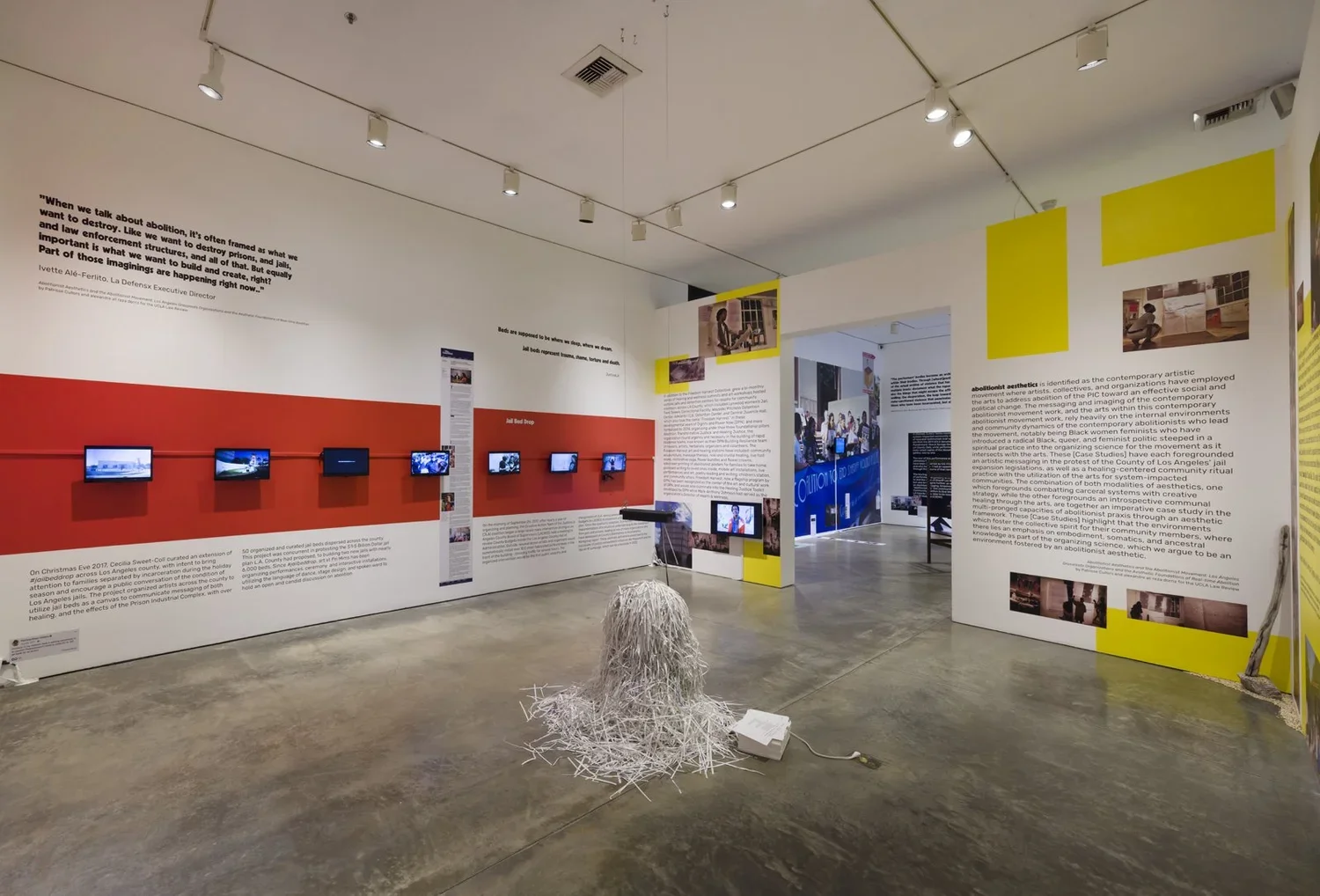
Image Courtesy of Long Beach Museum of Art and Crenshaw Dairy Mart. Photo by Jeff Mclane.
The research as part of this exhibition has been informed by the theory of abolitionist aesthetics. Developed by Crenshaw Dairy Mart co-founder Patrisse Cullors alongside her community and cohort abolitionist aesthetics is examined in the publication of Abolitionist Aesthetics and the Abolitionist Movement: Los Angeles Grassroots Organizations and the Aesthetic Foundations of Real-time Abolition authored by Crenshaw Dairy Mart co-founders Patrisse Cullors and alexandre ali reza dorriz for the UCLA Law Review. In several case studies, through interviews with movement leaders, organizers, and artists alike, the article studies the tools and strategies for protest employed by contemporary Los Angeles based artists, collectives, and organizations, highlighting the utilization of a distinct language of aesthetics as a principal instrument for abolition in the contemporary abolitionist movement. The article elaborates that the instrumentalization of aesthetics through a myriad of performances, exhibitions, public activations, and interventions address the abolition of the Prison Industrial Complex (PIC) in such an accessible and effective manner that they have frequently moved on to creating organizations which influence policy change.
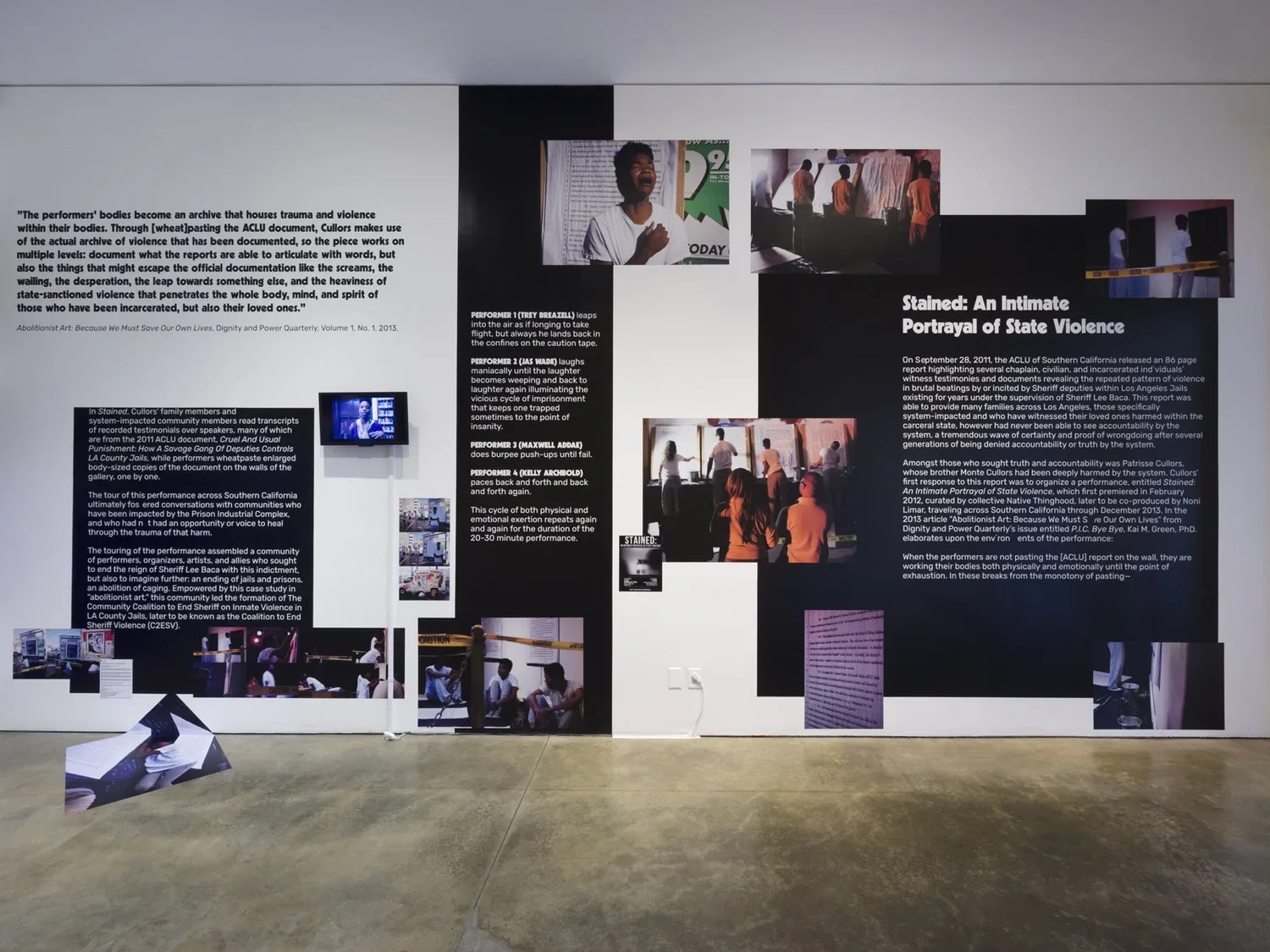
Image Courtesy of Long Beach Museum of Art and Crenshaw Dairy Mart. Photo by Jeff Mclane.
The case studies and central themes as part of the law review article and this survey exhibition have been organized through notable works in performances, collectives, and projects alongside the respective organizations, policy work, or healing initiatives they have birthed. This exhibition celebrates the labor of organizers and grassroots abolitionist movement workers. It also honors their individual and collective efforts to implement alternatives to the carceral state, the call-and-response nature of community organizing, the recorded successful halting of jail expansion legislation, and the healing through community building initiatives. This exhibition candidly shares only portions and glimpses of a much larger story. Each of these case studies have been incorporated into the robust curricular handbook and curriculum rubric created by the Crenshaw Dairy Mart for their inaugural Crenshaw Dairy Mart Fellowship for Abolition and the Advancement of the Creative Economy (CDM-FAACE) in a chapter entitled Notable Works for the Advancement of Abolitionism in Grassroots Los Angeles Abolitionist Organizations. The chapter builds upon the methodologies and modalities of the arts employed by these grassroots abolitionist organizations that specifically utilize a language of aesthetics as an instrument for abolition. These case studies provide a blueprint to how the arts have been instrumentalized, mobilized, and employed in the development of a potential rubric for cultivating a culture of embodied abolitionism for generations of artists to come. This culture of embodied abolitionism imagines the arts’ engagement with policy work as a resonant vehicle for abolitionist organizing in order to dismantle the prison state.
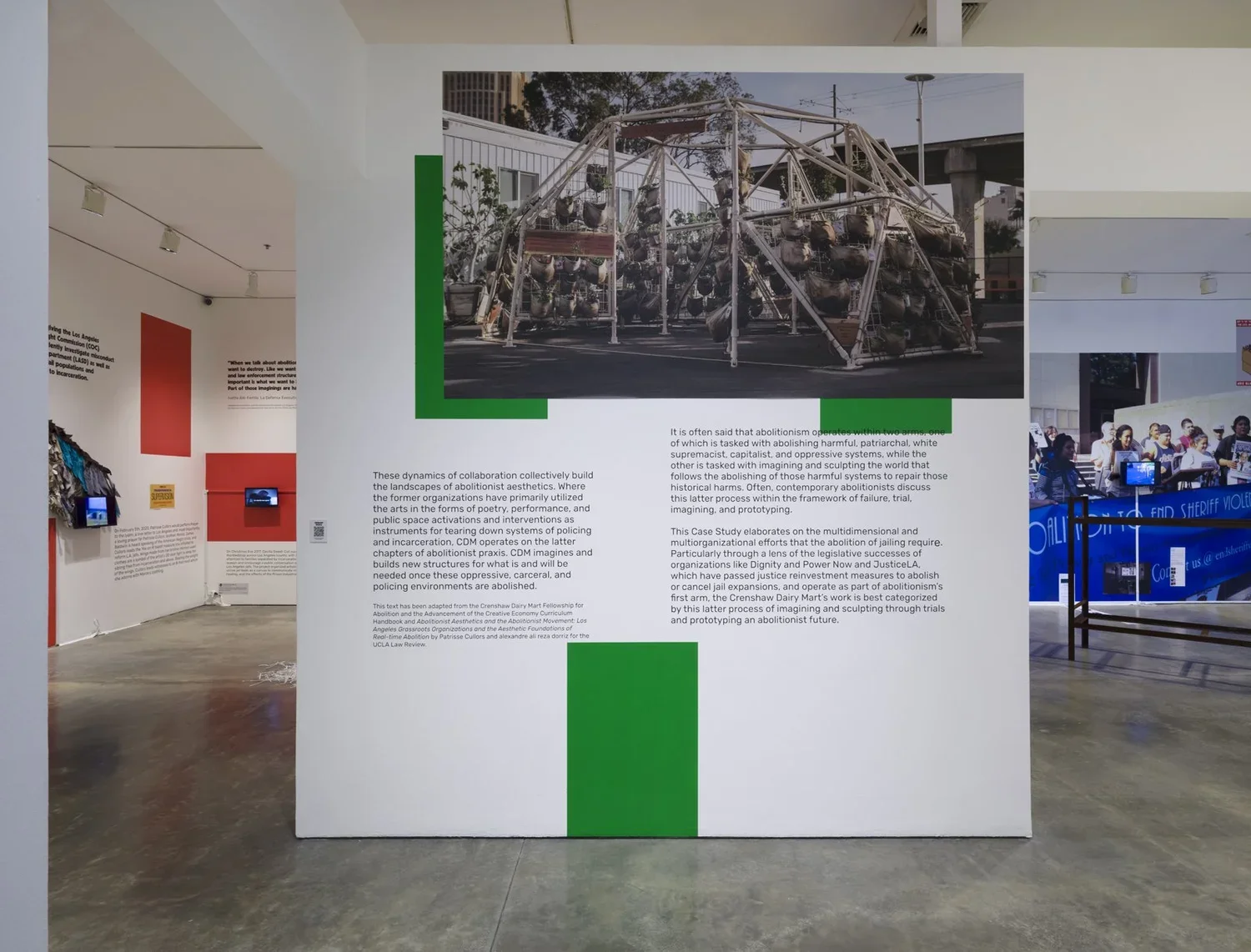
Image Courtesy of Long Beach Museum of Art and Crenshaw Dairy Mart. Photo by Jeff Mclane.
View exhibition website here.

(Foreground: From left to right) Patrisse Cullors, work worn by Cullors for performance, Prayer to the Iyami, at the Broad Museum (2020) ; Paul Cullors, Saint Nip (2020) ; 2,865 pages of the 2014 “Architectural Program for Consolidated Correctional Treatment Facilities and Detention Centers,” AKA Los Angeles County Jail Expansion Plan, alongside paper shredder
(Background) Patrisse Cullors, Documentation from Performance, Stained: An Intimate Portrayal of Violence, 2012.
YES ON R! Archives and Legal Conceptions (Part 1: 2011 - 2013)
On view from February 29, 2020 through December 29, 2020
Yes on R! Archives and Legal Conceptions examines the early organizing work between several local grassroots organizations over the span of nine years which successfully mobilized to implement Measure R on the 2020 Los Angeles, California primary elections ballot. Part 1: 2011 - 2013 looks specifically to the conception of Dignity and Power Now, Reform LA Jails, and Justice LA and the many public art efforts which entangled these organizers’ practices. The 2011 ACLU of Southern California’s report is a pivotal moment providing local organizers substantial evidence to their grassroots efforts maintained for several years long before the release of the report, but gaining more recognition for a wide public. More central is the labor of organizers and movement workers, in an attempt to honor their individual and collective efforts, and their collective efforts to implement rehabilitation and mental health treatment as an alternative to the carceral state, which includes healing through community building and initiatives such as the Civilian Oversight Commission as they fit within the legacies of abolitionist movements.

(Background: From left to Right) Archived email written by Patrisse Cullors to Reform L.A. Jails team after the Los Angeles County Board of Supervisors’ unanimous vote to place Reform L.A. Jails initiative (later to be called, Ballot Measure R) on the California presidential primary March 3, 2020 ballot (dated October 11, 2018) ; Patrisse Cullors, work worn by Cullors for performance, Prayer to the Iyami, at the Broad Museum, 2020. ; Paul Cullors, Saint Nip, 2020.
(Foreground) 2,865 pages of the 2014 “Architectural Program for Consolidated Correctional Treatment Facilities and Detention Centers,” AKA Los Angeles County Jail Expansion Plan, alongside paper shredder
The Yes on R! Archives and Legal Conceptions exhibition has specifically focused on how art, as either performance or public interventions, has always been a first responder to injustices within this movement effort. Stained: An Intimate Portrayal of State Violence by Patrisse Cullors in January 2012 was the first response to the report which highlighted the injustices Cullors’ brother Monte experienced during incarceration nearly a decade prior. That same year Cullors will birth The Coalition to End Sheriff Violence, which implemented the Civilian Oversight Committee (COC) in Los Angeles County Jails.
A recently published essay by Patrisse Cullors looks to Selma, Alabama 1965 and Dr. Martin Luther King’s organizing efforts to push - in solidarity with several grassroots movement organizers such as the NAACP, the Student Nonviolent Coordinating Committee (SNCC), and King’s own Southern Christian Leadership Conference - the Voting Rights Act of 1965. Cullors relates this 1965 movement to the conceptions and progression of “Yes on R” today; ultimately, it exhibits a strong correlation between voters’ suppression in the 1960s and carceral capitalism today.
In an effort to both bend and twist linear time which misrepresents Afrocentric political organizing, the exhibition looks to artwork exhibited today, yesterday. and tomorrow. As a prototype for using community participation to engage with both ballot measures and political organizing, Yes on R! Archives and Legal Conceptions attempts to only whisper the magnitude of this historical precedence towards the abolitionist movement.

2,865 pages of the 2014 “Architectural Program for Consolidated Correctional Treatment Facilities and Detention Centers,” AKA Los Angeles County Jail Expansion Plan, alongside paper shredder

(foreground) 2,865 pages of the 2014 “Architectural Program for Consolidated Correctional Treatment Facilities and Detention Centers,” AKA Los Angeles County Jail Expansion Plan, alongside paper shredder
A combination of both archival materials and objects invite the audience to actively engage with the subject matter. Audiences have the opportunity to tactilely engage with the artifacts with the intention of practicing their civil right of engagement and oversight by shredding the 2,865 pages of the 2014 “Architectural Program for Consolidated Correctional Treatment Facilities and Detention Centers” AKA Los Angeles County Jail Expansion Plan that is adjacent to the shredder. This plan was successfully halted by grassroots organizers. Yes on R! also reflects the call-and-response nature of community organizing as it relates to public need and the iterative nature of fixing broken systems. Inspired by organizers’ successful reimagination and implementation of a new system, the audience is also meant to reimagine the future of a new society without a carceral state. Just as the fight for Measure R serves as a prototype for community engagement, Yes on R! may serve as a prototype for illuminating the art, history, and potential of reformative movements.
The history highlighted proves that art has always played a role in organizing. This new reality of civilian oversight and reimagined systems coming to fruition call for art to continue to carry this torch. The exhibition’s opening on the weekend before Super Tuesday and the subsequent landslide victory by the Yes on R! Campaign, looks to the ongoing legacy of conversations between grassroots organizing and abolitionists’ policy change in America.

“Cruel and Usual Punishment: How a Savage Gang of Deputies controls LA County Jails” A Report by the ACLU National Prison Project and the ACLU of Southern California, September 2011.
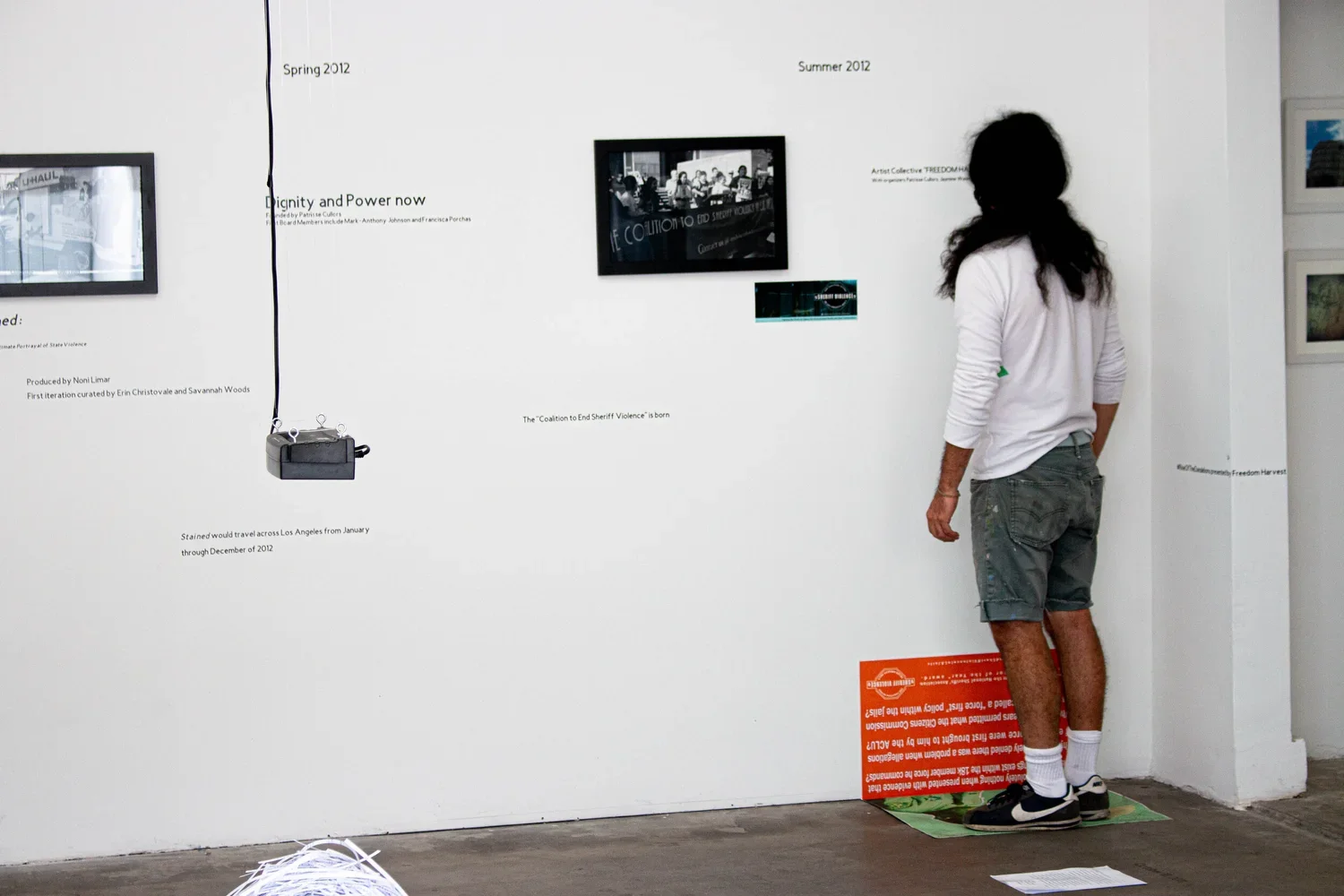
Documentation of the Coalition to End Sheriff Violence (C2ESV) actions, 2012. Archived poster by The Coalition to End Sheriff Violence in Los Angeles Jails, “Would Our Sheriff of the Year Please Explain…”, 2012.
This exhibition has been curated by Autumn Breon Williams and alexandre ali reza dorriz
View exhibition website here.